
Warning Signs of Termites Every Homeowner Should Know
For most people, a home is the largest financial investment they will ever make. Protecting that investment requires regular maintenance, a keen eye for detail, and an understanding of the hidden threats that can compromise a building's structural integrity. Among these hidden threats, few are as insidious or destructive as termites. Often referred to as "silent destroyers," these wood-boring insects can quietly chew through the structural framing, flooring, and support beams of a house without leaving any immediate outward signs of their presence. According to Consumer Affairs, termites cause more than $5 billion in property damage annually. What makes this statistic particularly terrifying for the average property owner is that standard homeowners' insurance policies almost never cover termite damage or remediation costs, as insurance companies view pest infestations as preventable maintenance issues.
By the time an untrained observer notices blatant structural damage, the colony has likely been established for years, leading to astronomical repair bills. Recognizing the early indicators of an infestation is the single best way to intercept these pests before they compromise the safety of your living space. In this article, we will examine the critical warning signs of termites that every homeowner should actively monitor to keep their property safe.
Mud Tubes Along Your Foundation
One of the most definitive physical signs of a subterranean termite infestation is the presence of mud tubes running up your concrete foundation, crawl space walls, or basement baseboards. Subterranean termites require specific moisture levels to survive and have incredibly delicate exoskeletons that dry out quickly when exposed to the open air. To safely travel between their underground colonies and the wooden structures of your home, they construct narrow, pencil-sized tunnels out of dirt, saliva, and fecal matter. If you spot these specialized earthen conduits twisting up your masonry, it means foraging workers have successfully bridged the gap between the soil and your house. Knocking a tube down with a stick can tell you if an infestation is active; if the insects quickly rebuild it, you need to reach out to a local pest control company right away.
Piles of Discarded Insect Wings
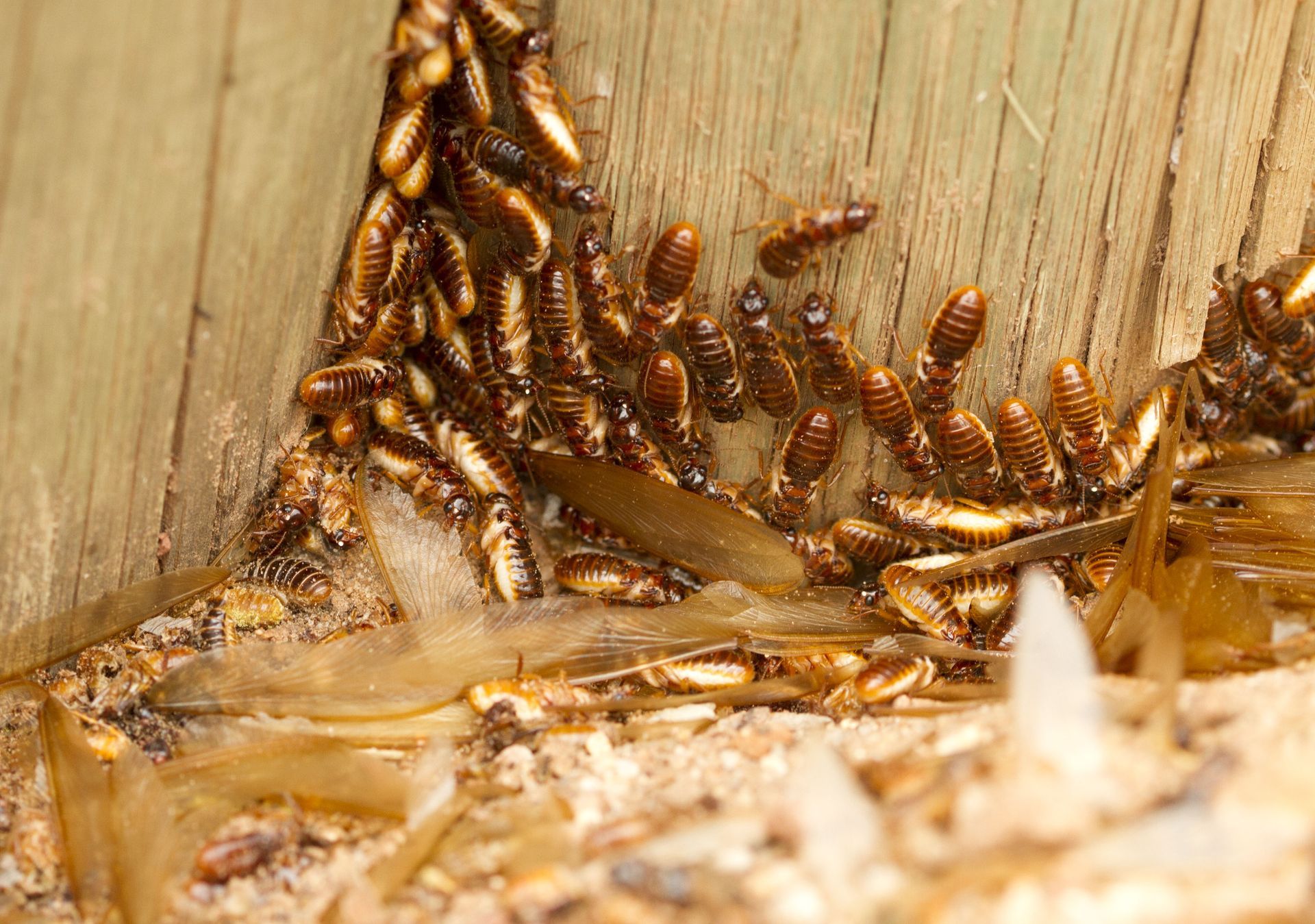
During the spring and summer months, mature termite colonies produce winged reproductive pests known as swarmers or alates. Their sole purpose is to leave the nest, take flight, find a mate, and establish a new colony nearby. Once these swarmers land and successfully pair up, they no longer need their wings and deliberately shed them. If you wake up and find small, translucent, silvery wings accumulated on your windowsills, near light fixtures, or webbed into doorways, it is a glaring red flag. Because swarmers are weak fliers, a large concentration of shed wings inside your living spaces almost always indicates that a mature colony is already nesting inside the framework of your building.
Hollow or Severely Damaged Wood
Because termites feed on the cellulose found within wooden structures, they devour wood from the inside out. This feeding pattern means a support beam or wall stud can look perfectly normal on the outside while being completely hollowed out on the inside. Homeowners can test the integrity of their exposed wood by gently tapping it with a screwdriver handle or a rubber mallet. If a solid timber beam emits a dull, hollow thud or if the screwdriver easily punctures the surface with minimal force, the interior has likely been hollowed out by wood-boring pests. A local pest control company can utilize advanced moisture meters and thermal imaging cameras to inspect deep within these dark structural cavities without ripping apart your drywall.
Faint Clicking Sounds Inside Walls
If your house is quiet at night and you press your ear against an exterior wall, you might actually hear the physical activity of an active infestation. When a colony is disrupted or senses a threat, soldier termites will rapidly bang their heads against the gallery walls to signal danger to the rest of the nest. This creates a faint, rhythmic clicking or snapping sound emanating from behind your perimeter walls. Additionally, the thousands of worker termites constantly chewing through the structural framework produce a soft, dry rustling noise as they move. If your walls seem to be making unexplainable noises, it is a strong indicator that a cryptic pest population is operating right beneath the surface.
Mysterious Piles of Frass
While subterranean species use their waste to build mud tubes, drywood termites take a completely different approach to housekeeping. As they consume dry wood, they create small kick-out holes in the surface of the timber to push their excrement out of their active feeding galleries. This waste material, known scientifically as frass, resembles tiny, oval-shaped pellets that look remarkably like heaps of sawdust, sand, or ground black pepper. If you consistently find these microscopic, uniform mounds accumulating on your hardwood floors, inside cupboards, or underneath wooden furniture, you are looking at the direct byproduct of an active drywood infestation.
Stuck Doors and Windows
Many homeowners mistake windows that suddenly refuse to budge or interior doors that scrape against their frames as minor signs of shifting foundations or seasonal humidity changes. While moisture does cause wood to swell, termites introduce a massive amount of localized humidity into structural framing through their breath, mud construction, and metabolic processes. As they hollow out the framing around your door jambs and window headers, the surrounding wood warps and sags under the weight of the building. If a door that used to swing freely suddenly gets stuck or jammed overnight, it is wise to have a professional evaluate the structural perimeter before assuming it is a harmless weather-related issue.
Peeling Paint That Resembles Water Damage
As termites tunnel through the thin layers of wood right behind your interior walls, they frequently breach the paper backing of your drywall. To prevent dry air from entering their colony, they quickly seal these tiny holes with mud, which traps moisture directly behind your interior paint or wallpaper. This trapped humidity causes the paint layer to bubble, crack, peel, or blister, creating an aesthetic defect that looks identical to a localized plumbing leak or roof failure. If you pop one of these mysterious paint bubbles and find a trace of dark mud or a hollow cavern instead of wet drywall, you are dealing with an insect invasion rather than a broken pipe.
Remaining hyper-aware of the subtle changes around your foundation, walls, and wooden fixtures is a fundamental duty of responsible homeownership. Termites are an ongoing threat, but they are entirely manageable if you catch them before they have the chance to compromise your structural framing or deplete your hard-earned equity. By conducting your own visual walk-throughs each spring and autumn, you can spot mud tubes, shed wings, or blistered paint before the colonial damage escalates into a multi-thousand-dollar structural crisis.
If you have noticed any suspicious hollow sounds, mysterious sawdust piles, or unexplained insect wings around your windowsills, do not wait for the structural damage to worsen. Contact B & T Pest Solutions today to arrange an expert, comprehensive inspection and permanently secure your home from devastating property damage. We want to ensure your home and family are safe all year long. We’ll be here to answer any questions you may have about our services.


Share On: